
December Lesson Plans & Teaching Topics for Middle and High School
Free classroom resources for Wildlife Conservation Day, World Soil Day, and Human Rights Day, plus activities exploring holiday food traditions around the world.

What can a holiday meal tell us about the soil that grew its ingredients, the wildlife that shares that land, and who can access the foods on the table?
These December lesson plans and teaching topics help middle and high school students explore those connections.
For Wildlife Conservation Day, students investigate how agricultural expansion affects a wild animal’s habitat.
For World Soil Day, they redesign a holiday menu and research how growers can protect the soil that supports one of its crops.
For Human Rights Day, they map where people in their community can find the ingredients for a meal and consider what might make those foods harder to get.
Use the activities on their own or connect them through a dish from ECP’s Healthy Holidays Guide. Students can explore the traditions behind the dish, try a plant-forward recipe swap, and plan how to use leftovers. Find videos, lesson plans, and supporting materials in ECP’s free resource library.
Featured December Teaching Topics
December 4 · Wildlife Conservation Day
Wildlife Conservation Day draws attention to threats such as poaching and illegal wildlife trade. It also gives students a chance to explore a question that connects wildlife conservation to what’s on their plates. What happens to the animals that live in a forest when some of that forest is cleared to produce food?

Featured ECP Resource · The Planet and Our Plates
Developed in collaboration with EARTHDAY.ORG, The Planet and Our Plates explores how food production uses land and water and how agricultural expansion can contribute to deforestation, habitat loss, and declining biodiversity. Start around 12:05 for the segment on deforestation and habitat loss. As students watch, ask them to trace the chain of events from clearing land for crops or grazing to changes in the food, shelter, and space available to wildlife. Find The Planet and Our Plates in ECP’s free Resource Library.
Try It in Class · Investigate Habitat Loss and Propose a Solution
Adapt the Day 3 activity from The Planet and Our Plates education package.
Have students choose a wild animal in a region discussed in the video, such as Brazil or Southeast Asia.
Ask them to research what the species needs to survive, how clearing land for agriculture changes its habitat, and one action that could help protect or restore that habitat.
Have each group share its findings in a short presentation or one-page infographic.
Close with two questions. Who could put your proposal into action? What evidence would show that it’s helping the species?
December 5 · World Soil Day

Where would you put a path in a school garden, and why might that matter for the plants? World Soil Day, observed each year on December 5, is a chance for students to explore how the ground beneath their feet helps grow the food on their plates.
The 2026 theme, “Tackle Soil Compaction, Boost Food Production,” focuses on what happens when soil is pressed together. Compacted soil has less space for air and water to move through, which can make it harder for roots to grow. Explore World Soil Day. Start your lesson with this 3-minute clip about World Soil Day called "Our future is rooted in soil."
Featured ECP Resource · Planetary Health
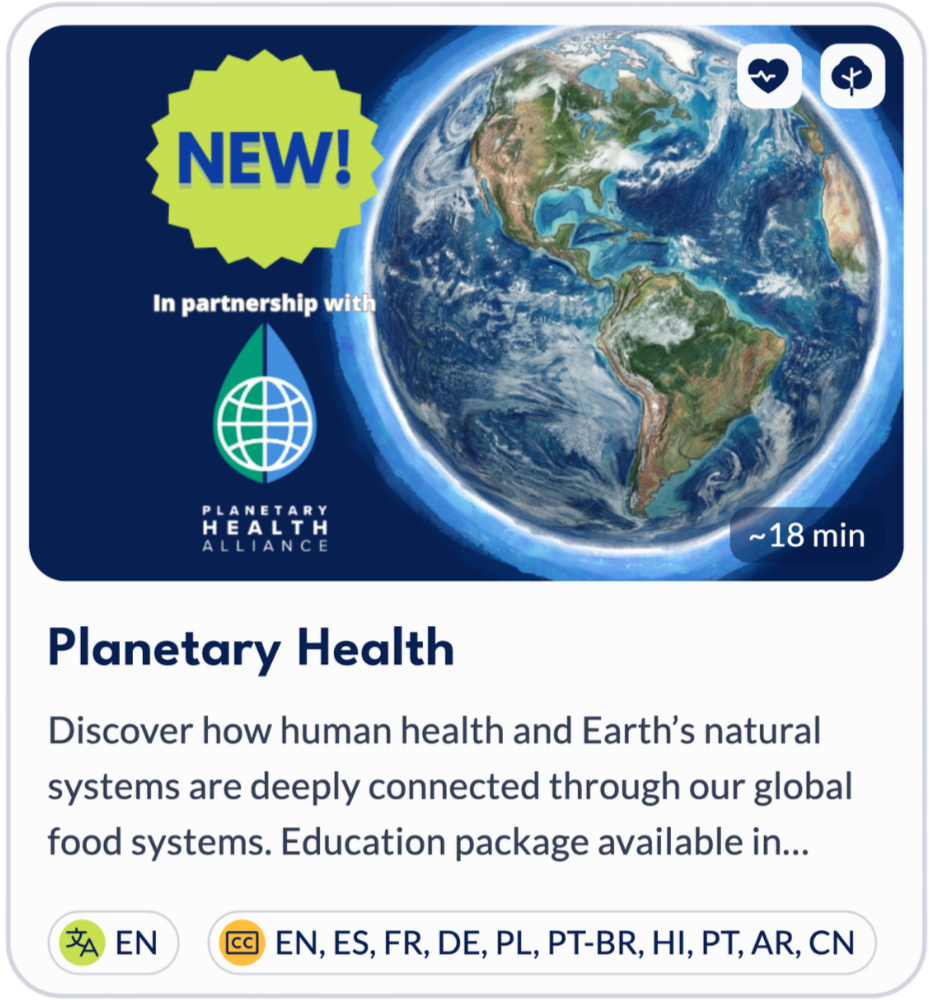
Developed with the Planetary Health Alliance, ECP’s 18-minute Planetary Health video explores how agriculture connects the health of people and the planet. For World Soil Day, use the video to connect a familiar food, such as a carrot or a potato, to the conditions it needs to grow. Ask students how the way we manage soil today might affect what we can grow in the future. Find Planetary Health in ECP’s free Resource Library.

Try It in Class · Redesign a Holiday Menu With Soil Health in Mind
Give “The Sustainable Plate Blueprint & Menu Redesign” from the Planetary Health education package a holiday twist.
Have students choose a menu from a holiday, seasonal gathering, or community celebration and use ECP’s Healthy Holidays Guide to find plant-forward dishes or ingredient swaps.
Then have them create an illustrated Planetary Health Cookbook Page showing the original and redesigned menus.
Ask students to explain which flavors or traditions they wanted to keep and how their changes could support human health and the environment.
Have students choose one crop from their redesigned menu and research one way growers can reduce soil compaction. Ask them to add a note to their cookbook page explaining how that practice can help the crop grow.
December 10 · Human Rights Day and the Right to Food
A grocery store may be just a few miles away, but what if you don’t have a car, the bus runs infrequently, or the foods you need cost more than you can afford? The 2026 Human Rights Day theme, “Making Humanity Together,” invites us to share stories of how people put human rights into practice in everyday life.
In the classroom, students can use that theme to explore the right to adequate food. Ask them what helps people get enough safe, nutritious food that fits their cultural traditions and how neighbors can work together to improve access. Community gardens offer one example of what that can look like close to home.
Featured ECP Resource · Growing Community Roots
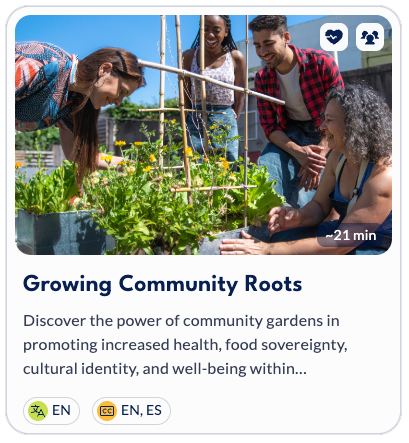
In Growing Community Roots, students hear from community leaders about how shared gardens can expand access to fresh produce and give neighbors a say in what food is grown and shared. The video introduces food sovereignty, which invites students to consider who gets to make decisions about their local food system. As students watch, ask them to listen for examples of how gardens help people grow foods that matter to their communities.

Try It in Class · Map Food Access in Your Community
Adapt Day 1 Homework, Question 2, “Research food access in your neighborhood,” from the Growing Community Roots Education Package.
Give small groups a sample meal and ask them to map where someone could get its ingredients. They might look at grocery stores, farmers markets, or community gardens that share produce with the public.
Have each group investigate one factor, such as food prices, bus routes, or opening hours, and use what they find to suggest one practical change that could improve access.
Close by asking whose input students would need to know whether their proposed change would help the people it’s meant to serve.
All Month · Holiday Food Traditions Around the World
What makes a dish feel like part of a celebration? It might be the spices, the way it’s served, or the people who make it together. This December, use ECP’s Healthy Holidays Guide and Healthy Holiday Meals blog to help students explore the stories behind familiar dishes and plan a plant-forward meal with less food waste.

Start with the Healthy Holidays Guide. Its Global Traditions section features plant-based recipes for dishes such as jollof rice, pozole, aloo parathas, and matzo ball soup. Students can compare ingredients and cooking methods, then learn from the recipe creators about how a dish is prepared and shared. The guide’s baking substitution chart also gives students a reference for exploring ingredient swaps. Download the free Healthy Holidays Guide.

Pair the guide with our blog, “Healthy Holiday Meals: Plant-Based Ideas, Familiar Traditions, and Less Food Waste.” Its sections on simple swaps and planning for “the meal after the meal” help students think through how to adapt a recipe, use ingredients they already have, and make a plan for leftovers.
Bonus Lesson · Explore Plant Milks Through Holiday Recipe Swaps

After watching Cream of the Crop: A Guide to Plant Milks, have students choose a holiday recipe that calls for milk, such as hot cocoa or rice pudding.
Ask them to pick two milks they could use in the recipe, trace how each is made, and compare one environmental measure, such as land use or greenhouse gas emissions per liter, using the same source for both.
Then have students choose which milk they’d use and explain how the environmental evidence and the recipe’s flavor or texture informed their decision.
Explore More Free Teaching Resources
Looking for a short video to start a discussion or a lesson you can adapt for a full class period? Educated Choices Program’s free Resource Library includes educational videos, lesson plans, activities, and discussion prompts on nutrition, food systems, and the environment. Browse the free Resource Library.
Follow ECP This December

December offers many ways to connect food education with health, community, children’s futures, and the work of educators. Find us on Instagram, Facebook, LinkedIn, and Pinterest.
For classroom-focused inspiration and educator-specific content, follow Teaching Educated Choices on Instagram and Facebook.
About Educated Choices Program:
At the Educated Choices Program, we believe every student deserves access to accurate and engaging education that empowers them to build a better future. If you agree, support our organization by using our resources in your classroom and connecting with us for future updates:


Comments