
September Teaching Topics: Climate Education, Wildlife, Nutrition & Food Waste
Updated: Sep 2
September Classroom Resources for Climate Week, National Wildlife Day, Better Breakfast Month, & Food Waste Prevention Week
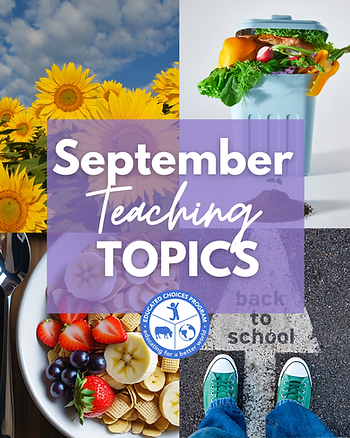
From Better Breakfast Month and National Wildlife Day to global food waste reduction efforts and Climate Week in one of the most influential cities in the world, educators can use September to help students see how the choices we make every day connect to much larger systems and how they have the power to improve them together.
This month is also exciting as ECP hosts two webinars, allowing teachers and their students to hear directly from our curriculum developers and representatives from the Planetary Healthy Alliance and Florida Green Schools PSTA. These free events also give students a chance to participate in Climate Week NYC and Food Waste Prevention Week, two growing movements with global impacts.
Featured September Teaching Topics:
Explore ECP’s free, classroom-ready videos, lesson plans, activities, discussion prompts, quizzes, and more to bring these September teaching topics into your classroom.
All September - Better Breakfast Month: Nutrition & Healthy Eating
September is Better Breakfast Month, making it a natural time to bring nutrition education into the classroom.
Rather than focusing on individual foods as “good” or “bad,” students can explore the nutrients our bodies need, how dietary patterns affect long-term health, and which foods support their energy, growth, and overall well-being.
Nutrition lessons can help students explore:
Vitamins, minerals, and phytonutrients
The role of fruits and vegetables in a balanced diet
How food supports energy and everyday activities
The relationship between nutrition and long-term health
How to evaluate nutrition information and make informed choices
These lessons encourage students to think critically about nutrition, understand how food supports their bodies, and make informed choices that support their long-term health and well-being.
Featured Resource: The Micronutrient Rainbow

ECP’s newly updated The Micronutrient Rainbow introduces students to vitamins, minerals, phytonutrients, and the benefits of eating a colorful variety of plant foods.
Pair it with Healthful Eating or Plant-Forward and Powerful to continue the conversation about nutrition, health, and informed food choices. For younger audiences, try Eat for Your Health.
September 4 - National Wildlife Day

National Wildlife Day on September 4 is an opportunity to raise awareness about wildlife species around the world and the need to protect them. According to World Animal Protection, more than 18,000 animal species are currently threatened with extinction. Climate change, habitat destruction, ocean exploitation, and commercial exploitation continue to put wildlife and their habitats at risk. National Wildlife Day also encourages students to look closer to home by considering the birds, mammals, insects, and other wildlife living in their own communities.
Students can explore questions they never thought about before:
How does land use affect wildlife habitats?
What is biodiversity, and why does it matter?
How are food systems connected to ecosystem health?
How can human activities contribute to habitat loss?
What choices can communities make to better protect natural systems?
Featured Resource: Planetary Health: Agriculture and the Anthropocene
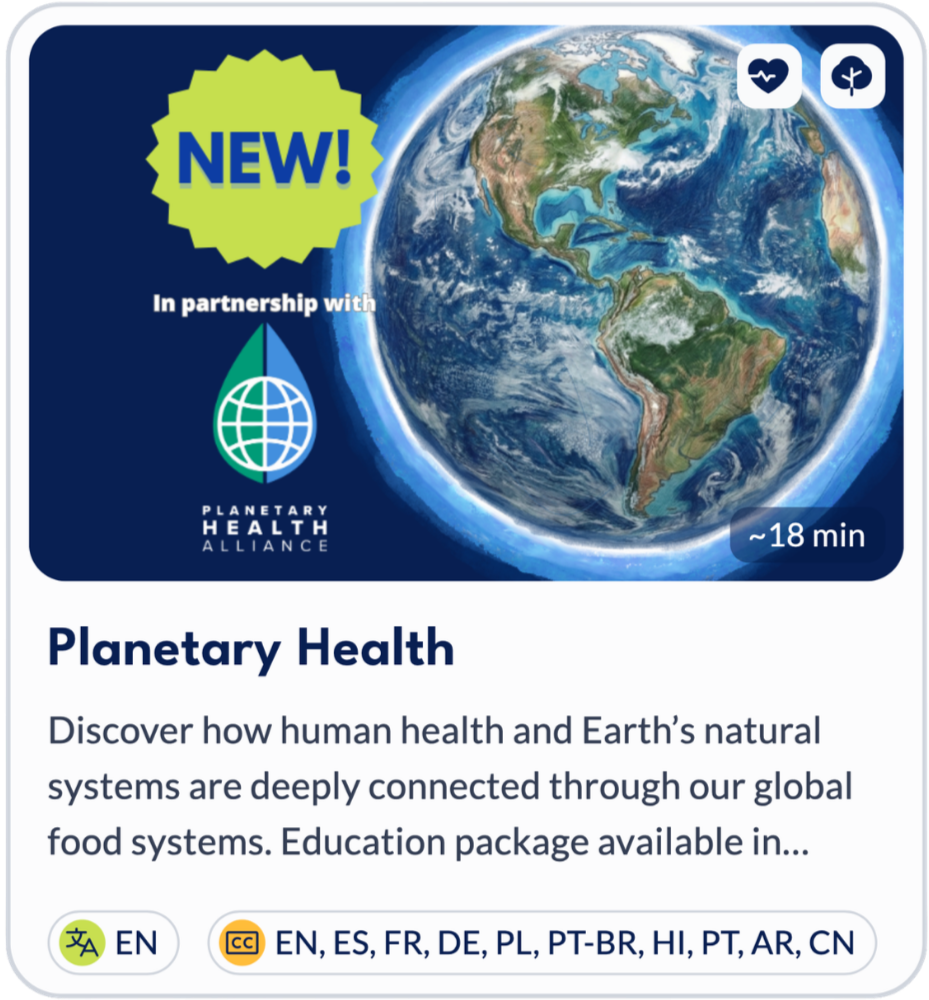
Pair National Wildlife Day with ECP’s newest resource, Planetary Health: Agriculture and the Anthropocene. Developed in collaboration with the Planetary Health Alliance, this classroom-ready lesson helps students explore how agriculture, land use, and global food systems affect biodiversity, wildlife habitats, and the natural systems on which all species depend.
September 20–27 - Climate Week NYC: Bring Climate Education Into the Classroom

Climate Week NYC is the world’s largest climate event and a global platform for advancing climate and economic progress at scale.
For educators, it is an ideal opportunity to help students understand that climate change is not an isolated environmental issue. It intersects with food systems, biodiversity, public health, agriculture, resource use, and everyday decision-making.
Climate education can help students:
Understand the relationship between human activity and climate change
Explore food systems as part of the climate conversation
Connect biodiversity and ecosystem health to human health
Evaluate potential climate solutions
Understand their own role within larger systems
Move from climate awareness toward informed action
ECP is an Official Host! Come Meet Us!

As an official Food Education Service Provider for NYC Public Schools, ECP has participated in Climate Week before. We're taking it a step further this year, hosting an official event, speaking at and sponsoring others, and being recognized at another!
Please join us at our Climate Week NYC event: ECP and the Planetary Health Alliance on September 21 at 10:30 a.m. ET for a free, classroom-friendly screening of Planetary Health: Agriculture and the Anthropocene.
Following the 18-minute film, students and educators can ask questions during a live Q&A with curriculum developers and experts from both organizations. Designed to fit within a single class period, the event will explore how agriculture connects to climate, biodiversity, water, human health, and the everyday choices we make.
Check out Climate Week NYC for more.
Will you be attending NYC Climate Week in person? We'd love to meet you! We'll be speaking atthe NYC Green School Conference and attending the Regenerative Summit as a Climate Curve Prize: Methane finalist. Email info@ecprogram.org if you'd like to schedule a meetings with an Educated Choices Program representative!
Featured Climate Week Resources
Each comes with a video, lesson plans, and additional downloadable materials.
Developed in collaboration with the Planetary Health Alliance, this classroom-ready resource introduces students to planetary health and explores how agriculture connects human health with the health of Earth's natural systems.

Developed in collaboration with the Environmental Working Group, this interactive lesson helps students calculate the climate impact of their food choices and discover practical ways to reduce their carbon foodprint.

Developed in collaboration with EARTHDAY.ORG, this classroom-ready resource explores how industrial agriculture and aquaculture affect the environment while empowering students to consider more sustainable food choices.
Turning Food Waste Education Into Action

Food waste is taking center stage this fall through two connected global observances: Food Waste Prevention Week and the International Day of Awareness of Food Loss and Waste. ECP is an official partner of Food Waste Prevention Week, taking place September 28–October 4.

September 29 also marks the International Day of Awareness of Food Loss and Waste, established by the United Nations, providing a powerful opportunity for students to examine what happens to food before and after it reaches their plates.
We will be hosting an event during Food Waste Prevention Week on the International Day of Awareness of Food Loss and Waste by bringing the conversation directly to educators with a free virtual webinar event:

From Waste to Wellness Webinar
Join the Educated Choices Program and the Florida Green School PTSA for From Waste to Wellness: Food Waste Solutions that Empower Students for a Sustainable Future.
September 29 | 4 p.m. ET | Virtual | Free
School lunchrooms are a significant source of food waste, but they can also become powerful spaces for learning and change. This 50-minute webinar will explore how educators can move students from early food waste education toward practical solutions they can support at school, at home, and throughout their communities.
Speakers include Lorena Mucke, CEO & Founder of Educated Choices Program, and Michele Drucker, President of Florida Green Schools PTSA.
Watch out featured resource below ahead of the webinar to discuss with the Florida Green PSTA to see how this early education can be combined with action in the school to create real impact in the community.
Featured Resource: Rethinking Food Waste
ECP’s award-winning Rethinking Food Waste: The Journey of Food follows a slice of pizza from its ingredients on the farm all the way to the landfill, helping students understand how food and other resources can be wasted at every stage of the food system.
Download ECP’s Food Waste Guide, which includes practical strategies for reducing food waste along with tools such as a meal planner and grocery list.

Support our Back-to-School Fundraiser!

Our resources are free to everyone, but they aren't free to create and distribute. Every donation helps the Educated Choices Program continue bringing this science-based food impact education to students and educators worldwide, empowering young people to understand how their everyday food choices can help build a healthier, more sustainable future.
We’re excited to launch this campaign and keep meaningful education accessible to millions of students.
Your gift equips one more classroom, inspires one more student, and helps build habits that last. Give today and help us reach more schools this Back-to-School season.
Follow ECP This September

September is going to be a busy month for ECP. Follow along for Climate Week NYC updates, food education events, classroom resources, Food Waste Prevention Week, and our September 29 webinar.
For classroom-focused inspiration and educator-specific content, follow Teaching Educated Choices on Instagram and Facebook.
About Educated Choices Program:
At the Educated Choices Program, we believe every student deserves access to accurate and engaging education that empowers them to build a better future. If you agree, support our organization by using our resources in your classroom and connecting with us for future updates:


Comments