
October Lesson Plans & Teaching Topics: Food, Earth Science and More
Free October Lesson Plans and Classroom Resources for World Animal Day, World Teachers’ Day, Earth Science Week, National School Lunch Week & World Food Day
From World Animal Day and World Teachers’ Day to Earth Science Week, National School Lunch Week, and World Food Day, this month’s observances open the door to conversations about food, health, equity, animals, climate, and the world we all depend on.
These October lesson plans and fall classroom activities can help students move beyond recognizing an awareness day. They can investigate real questions, examine credible evidence, identify connections across subjects, and consider how individual and collective choices shape the future.
Featured October teaching topics
Explore ECP’s free, classroom-ready resource library, including videos, lesson plans, activities, discussion prompts, quizzes, and downloadable materials.
October 4 — World Animal Day: Animals & Our Planet
World Animal Day, "a day for world animal lovers worldwide," reaches over 50 million people online, as advocates across the globe celebrate and protect the animals that we share our planet with. The observance offers an opportunity to explore the many ways human lives intersect with the lives of animals. This day was named after the feast day of St. Francis of Assisi, the patron saint of animals, and was created to raise the status of animals and improve welfare standards around the globe.
For students, that can mean looking beyond companion animals and wildlife to examine habitats, biodiversity, agriculture, food production, and the health of shared ecosystems.
Food systems provide a particularly meaningful entry point. The ways food is produced can affect land use, water, forests, oceans, climate, and the animals who rely on those environments. Examining these connections helps students understand that animal well-being is not an isolated subject; it is tied to environmental health, human health, and everyday systems. Use the hashtag #WorldAnimalDay to connect more!

Featured World Animal Day Resource:
The Planet and Our Plates, explores how modern industrial agriculture and aquaculture affect animals, natural resources, biodiversity, workers, and the climate. Students examine challenges including land and water use, deforestation, overfishing, fish farming, and food waste while considering practical solutions and more environmentally responsible food choices.
Educators can also pair this lesson with The Planet and Our Plates or Sea the Impact to expand the conversation across land and ocean ecosystems.
October 10 — World Plant-Based Burger Day: The Future of Protein

World Plant-Based Burger Day creates a light entry point into a much larger topic: how innovation is changing the ways protein can be produced.
The Good Food Institute is a nonprofit organization working to advance alternative proteins through scientific research, policy, and industry support. This includes plant-based foods and cultivated meat, which is real meat grown directly from animal cells. Companies such as UPSIDE Foods are helping move this technology forward, giving students another emerging approach to food production to examine alongside plant-based options.

Featured World Plant-Based Burger Day Resource: What is Plant-Based Meat?
Developed in partnership with the Good Food Institute, What Is Plant-Based Meat? introduces students to the history and science of plant-based meat. Using ECP’s free education package, students can compare plant and animal proteins, examine the resources required to produce them, explore how plant-based meat products are made, and consider their potential effects on the environment, public health, and society.
This topic can also serve as a segue into other forms of alternative protein, including cultivated meat, which is real meat grown directly from animal cells. Companies such as UPSIDE Foods are helping advance this emerging technology, giving students another approach to the future of protein to explore.
October 11–17 — Earth Science Week: Connecting Earth’s Systems

Earth Science Week invites students to examine the planet as a dynamic, interconnected system. The week includes Minerals Day, Earth Observation Day, No Child Left Inside Day, National Fossil Day, Geoscience for Everyone Day, Geologic Map Day, and International Archaeology Day.
Together, these focus days encourage students to observe Earth’s systems, learn outdoors, explore geoscience careers, and understand the natural resources and scientific knowledge that shape society.
Explore Earth Science Week’s full schedule, downloadable resources, and classroom activities here.
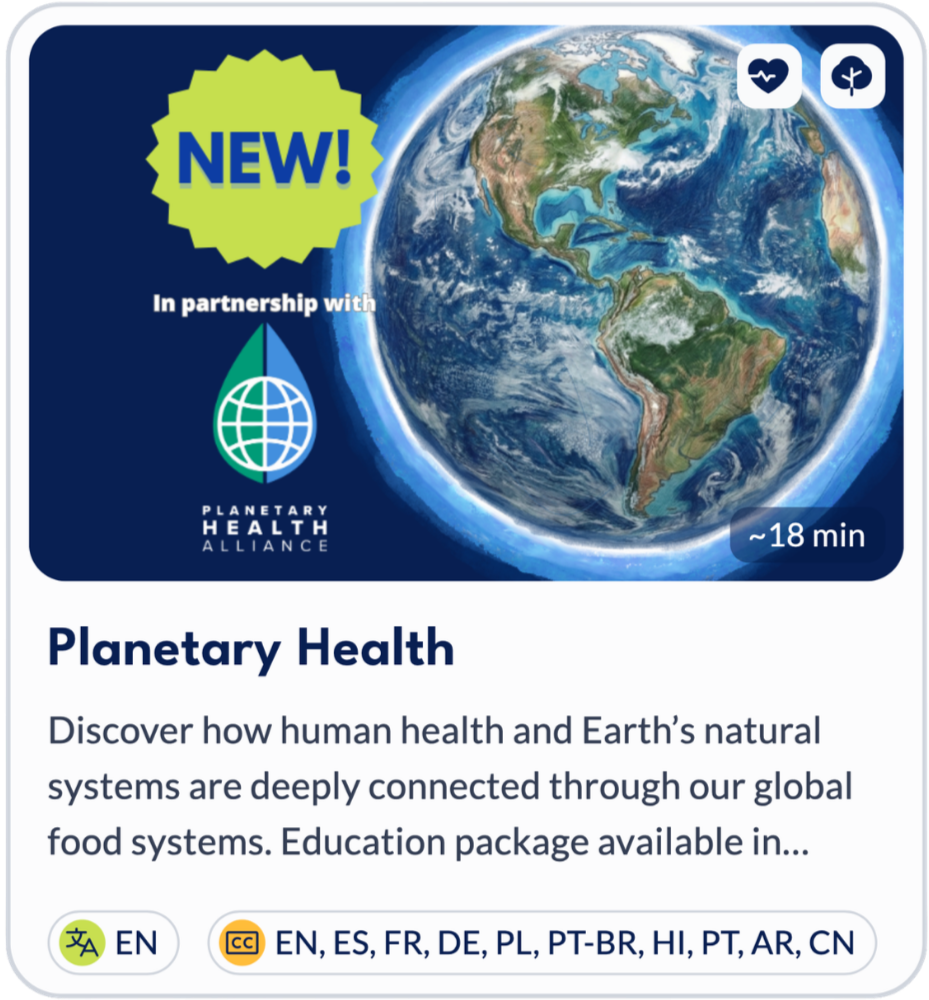
Featured Earth Science Week Resource: Planetary Health: Agriculture and the Anthropocene
Developed with the Planetary Health Alliance, Planetary Health: Agriculture and the Anthropocene supports this broader theme by helping students examine the connections among land, water, climate, biodiversity, agriculture, and human health.
Another great resource for this week is, "Our Carbon Foodprint," developed with the Environmental Working Group. Help students investigate the climate impacts associated with food choices and consider practical ways to reduce their carbon foodprint. It is ready to use with activities and discussions centered around measuring food's climate impact, learning how our food systems contribute to environmental concerns, and easy ways to reduce their carbon foodprints.
October 12–16 — National School Lunch Week: What Can School Meals Teach Us?

National School Lunch Week has celebrated the role of healthy school meals since President John F. Kennedy established the observance in 1962. This year’s theme, “Cafeteria Circus: Where Nutrition Takes Center Stage,” invites schools to spotlight the nutrient-dense “star performers” on their menus, including fruits, vegetables, whole grains, and other foods that help students learn and thrive.
The observance is part of a longer history of expanding and improving school meals. President Harry S. Truman signed the National School Lunch Act in 1946, establishing the National School Lunch Program. Decades later, First Lady Michelle Obama made children’s health and school nutrition a central focus of the Let’s Move! initiative. In 2010, President Barack Obama signed the Healthy, Hunger-Free Kids Act, which updated school meal nutrition standards for the first time in 15 years and expanded access to healthier meals.
School nutrition continues to evolve. Updated USDA standards are introducing new limits for added sugars and sodium over several school years. As educators, families, and students work to understand changing recommendations, access to clear, science-based, and unbiased nutrition education is increasingly important.

Featured National School Lunch Week Resource: Healthful Eating
ECP’s free Healthful Eating education package helps students explore the foundations of nutrition, understand the roles of different nutrients, and evaluate how everyday food choices can support health. It offers an accessible way to bring this year’s “star performers” theme into the classroom while encouraging students to think critically about the foods served on their plates.
October 16 — World Food Day: The Need for Trusted Education

What is World Food Day? World Food Day, observed every year on October 16, brings global attention to hunger, nutrition, agriculture, and the future of food. This year’s theme is ‘Innovate today. Nourish tomorrow.’
Few topics touch as many parts of life at once. Food connects health and culture with economics, geography, climate, technology, labor, public policy, animal welfare, and the environment. This year, those connections are becoming even harder to overlook.
Food production depends on stable access to water, healthy soil, suitable temperatures, predictable seasons, pollinators, and functioning ecosystems. Climate change can disrupt each of those conditions.
Students deserve opportunities to understand those relationships without fear-based messaging or overly simple answers. They can examine how food systems contribute to environmental pressures, how changing conditions affect food production, and how adaptation, innovation, policy, and everyday choices can all be part of the response.
FAO’s 2026 World Food Day guidance encourages people to use reliable sources, avoid food myths, and allow science to guide action. It also identifies school nutrition education and clear, consistent communication as important tools for building informed choices and public trust.
Featured Resource for World Food Day: The Planet and Our Plates
Developed with EARTHDAY.ORG, The Planet and Our Plates explores how modern agriculture and aquaculture affect natural resources, biodiversity, climate, public health, and communities while helping students identify practical solutions and more environmentally friendly food choices.
October 5 — World Teachers’ Day: Recognizing the Unseen Work

World Teachers’ Day is a celebration of educators, but it is also an opportunity to recognize the work that often happens outside our view. This year's 60th anniversary theme is “Standing with teachers: 60 years of protecting the profession, advancing its status and shaping our futures."
A class period may last less than an hour. But we know preparing for it can involve researching, planning, adapting materials, checking accessibility, communicating with families, responding to student needs, grading, documenting progress, and reworking tomorrow’s lesson based on what happened today. You are not simply delivering information.
Recent research helps make that unseen work visible. In RAND’s 2026 State of the American Teacher survey, 30% of teachers reported holding a job outside their school system, spending an average of 13 additional hours per week at that job. Teachers also reported spending a little more than $600 of their own money on school supplies. Earlier RAND findings showed that teachers worked longer weeks and experienced job-related stress and burnout at substantially higher rates than comparable working adults.
Those numbers do not capture every late-night email, revised lesson, encouraging conversation, or moment spent helping a student believe they can succeed. But they offer a glimpse of how much teaching requires beyond the time visible on a school schedule.
At ECP, one way we aim to support educators is by making our complete resource library free and classroom-ready. Every video includes supporting materials designed to help teachers bring complex, real-world topics into class without having to build a lesson from the ground up.
To every educator doing the work students see, and the work they may never know happened, thank you.
We're here to make it easier. Let us know how we can help. Feel free to reach out to us at support@ecprogram.org for any questions on how to bring food impact education into your classroom!
Follow ECP This October

October offers many opportunities to connect food education with animals, teachers, science, school meals, and the environment. Follow ECP throughout the month for classroom resources and ideas supporting World Animal Day, World Teachers’ Day, World Plant-Based Burger Day, Earth Science Week, National School Lunch Week, and World Food Day.
For classroom-focused inspiration and educator-specific content, follow Teaching Educated Choices on Instagram and Facebook.
About Educated Choices Program:
At the Educated Choices Program, we believe every student deserves access to accurate and engaging education that empowers them to build a better future. If you agree, support our organization by using our resources in your classroom and connecting with us for future updates:
Sources


Comments